Mornington Peninsula Facts: Forts, Quarantine and a Vanished Prime Minister
The short answer. The quiet tip of the Mornington Peninsula guarded Melbourne through two world wars, quarantined its migrants and housed refugees as late as 1999. A prime minister vanished off its beach. You can stand at every one of these places, and most of our Mornington Peninsula guided tours pass at least one of these places, and here are the facts behind them.
The tip: a gate to a city
1. The park is named after a British politician
Point Nepean takes its name from Sir Evan Nepean, a British politician and colonial administrator. The park now covers 560 hectares at the most westerly point of the peninsula.
2. The entrance to the bay is a ship graveyard
An estimated 130 shipwrecks lie in the Port Phillip area, and more than 50 of them came to grief in The Rip. That is the narrow triangle of water between Point Nepean, Point Lonsdale and Shortlands Bluff, where the bay empties into Bass Strait.
3. Victoria's worst shipwreck happened here
In 1887 the SS Cheviot hit a reef in a storm off the ocean side of the tip. Of the 59 passengers, 35 drowned. Parks Victoria calls it the state's worst shipwreck, and the beach still carries the ship's name.
4. A serving prime minister disappeared from that beach
In 1967 Prime Minister Harold Holt disappeared while swimming at Cheviot Beach. A viewing area looks over the beach, and a memorial marks the site. Swimming there is banned today: access from the shore to the ocean beaches in the park is prohibited.
Quarantine and the forts
5. The quarantine ground housed refugees in 1999
The Quarantine Station protected Victoria from disease during waves of immigration, later served as an army base, and in 1999 housed refugees from Kosovo. Its 50 heritage-listed buildings hold artefacts more than 150 years old, and selected ones open from 9 am to 4:30 pm daily.
6. The forts guarded Melbourne in both world wars
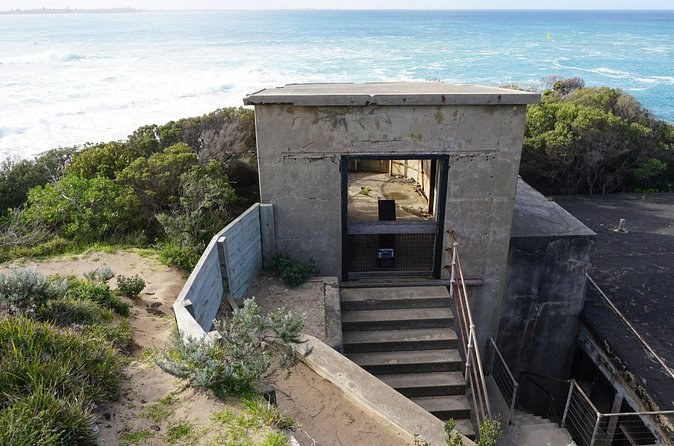
Fort Nepean, at the very end of the peninsula, is one of the fortifications that protected Port Phillip and Melbourne in World War I and World War II. A tunnel complex links its gun emplacements, and you can walk through it.
7. The bike path was a wartime telegraph line
Coles Track, the shared path out to the fort, was laid out in the 1940s for wartime telegraph services. Gunners Cottage beside it was built as the home of the fort's Master Gunner.
The coast and the ridge
8. The lighthouse has worked since 1859
Cape Schanck Lighthouse has guided ships along the ocean coast since 1859. The lighthouse, the museum and the keeper's residence are all heritage-listed. Below them, Pulpit Rock and the Devils Desk were shaped by volcanic and geological movement over millions of years.
9. A 314-metre ridge shows you three horizons
The summit of Arthurs Seat is only 314 metres high. On a clear day the view runs to the Melbourne skyline, the You Yangs and Mount Macedon.
10. The biggest patch of native bush is a kangaroo haven
Greens Bush, inside the national park, is the largest fragment of native bushland left on the peninsula. Parks Victoria calls it a kangaroo haven.
The water and the wine
11. The pools sit on natural mineral springs
Peninsula Hot Springs draws natural geothermal mineral water. Its two bathing areas hold more than 70 bathing experiences between them, and on Friday and Saturday nights there is moonlit bathing from 10 pm to 2 am, for over-18s only.
12. A winery holds one of the country's largest private sculpture collections
You can walk the lawns at Pt. Leo Estate, whose 16-acre sculpture park describes itself as Australia's largest collection of privately owned sculptures. The works include pieces by Deborah Halpern, KAWS, Jaume Plensa and Julian Opie, set above Western Port. The estate and its neighbours are on Mornington Peninsula wineries.
The land and the walks
13. You can walk from one bay to the other ocean
The Two Bays Walking Trail runs 26 km from Dromana, on Port Phillip, over the ridge to Cape Schanck on Bass Strait. You do not have to walk it all: the 2.6 km Bushrangers Bay Track from the Cape Schanck car park gives you a taste of the ocean end.
14. The whole peninsula is Bunurong Country
Parks Victoria describes both Arthurs Seat and the national park as part of an Aboriginal cultural landscape in the traditional Country of the Bunurong People. You will see the acknowledgement at the start of the parks' own pages, and the springs use it too.
15. One tower shows you three waters at once
At the tip, the Range Area Walk leads to the Monash Light Tower. From there you get panoramas across Bass Strait, Port Phillip and the Melbourne skyline. If you prefer the flat, the Bay Beach Walk takes you instead to the old quarantine cattle jetty at Observatory Point.
| Fact | Where | Year or figure |
|---|---|---|
| Shipwrecks in the Port Phillip area | The bay and The Rip | About 130 |
| The state's worst shipwreck | Off the ocean side of the tip | 1887 |
| A prime minister disappears | Off the ocean side of the tip | 1967 |
| Refugees housed at the quarantine ground | The tip | 1999 |
| The lighthouse first lit | The ocean coast | 1859 |
| The ridge's summit | Above Dromana | 314 m |
What no one can promise you
Wildlife is the one thing that no product can sell for certain. The Sorrento cruise often meets seals and dolphins, but they are not promised. The whale cruises promise nothing either, and they are Phillip Island cruises from San Remo, across Western Port, rather than peninsula ones.
- To see the forts and the quarantine ground with a guide: the southern-coast day spends two and a quarter hours at the tip, for $87 a person.
- To ride it yourself: the self-guided bike at the tip costs $28 a person.
- To see the lighthouse and the arch on your own: start with things to do on the Mornington Peninsula and the Mornington Peninsula map.
The weather at the tip turns fast, so check the month-by-month averages before a long walk. How the towns fit around these sites is in the peninsula town by town.
Days with the history in them
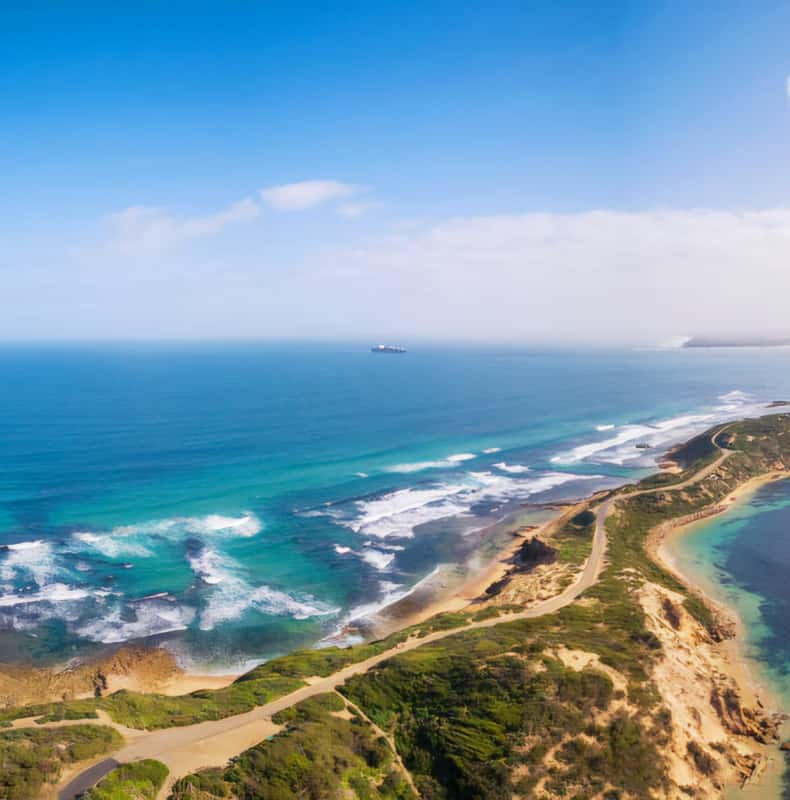
Melbourne: Mornington Peninsula Southern Coast Discovery
Up to 15 on a midi-coach from Arts Centre Melbourne: a lookout walk on the ridge, the forts, tunnels and old quarantine buildings at the tip of the peninsula, and free time in Sorrento. Lunch is not included.
From $87 per person
Check Availability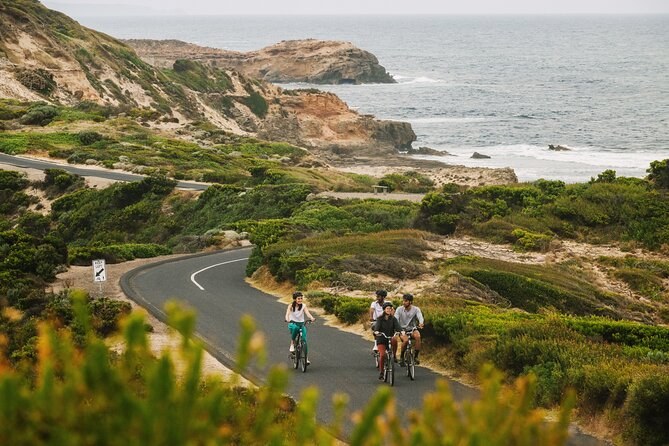
Mornington Peninsula: Self-Guided Bike Tour w E-Bike Option
Bike hire, a helmet, a lock and a park map from the shop at the tip, then two to three hours riding past the old quarantine ground and out to the forts at your own pace.
From $28 per person
Check Availability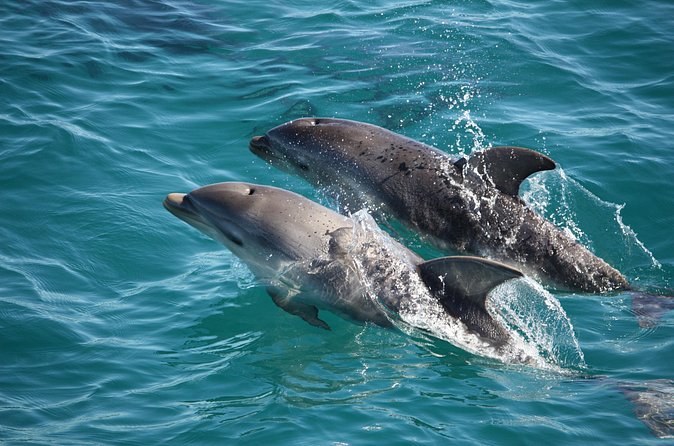
90 minute wildlife and scenic cruise
Ninety minutes from Sorrento Pier on a purpose-built boat, with a guide's commentary, snacks and hot drinks. Seals and dolphins are often seen but never promised.
From $53 per person
Check AvailabilityNext: Choose the story you want to stand in, then the day that takes you there. Every fare sits side by side on Mornington Tours.